
In modern society, there are roles that are not found in any official job description, yet without them, family structures would quickly crumble. One of these roles is known as “kinkeeping”. This term describes the invisible labor of maintaining communication, organizing gatherings, and preserving the emotional bridges between relatives. It is the work that ensures cousins know one another, that grandmother receives a call on her birthday, and that family traditions do not fade with time. While it may look like a natural flow of daily life, kinkeeping is a conscious and often exhausting effort.
Emotional labor and its distribution
Despite progress in the distribution of household chores, kinkeeping is mostly done by women. Research shows that the women in the family—mothers, wives, daughters—bear the primary weight of this emotional labor. They are the ones who buy the gifts, write the greeting cards, and coordinate the logistics of visits. The problem lies not in the actions themselves, but in the cognitive load they carry. A woman does not just buy a gift, she tracks preferences, checks availability, and ensures no one feels neglected. This constant state of “thinking for others” leads to mental fatigue that often goes unnoticed by other family members, as the results are taken for granted.
Holidays as a test of endurance
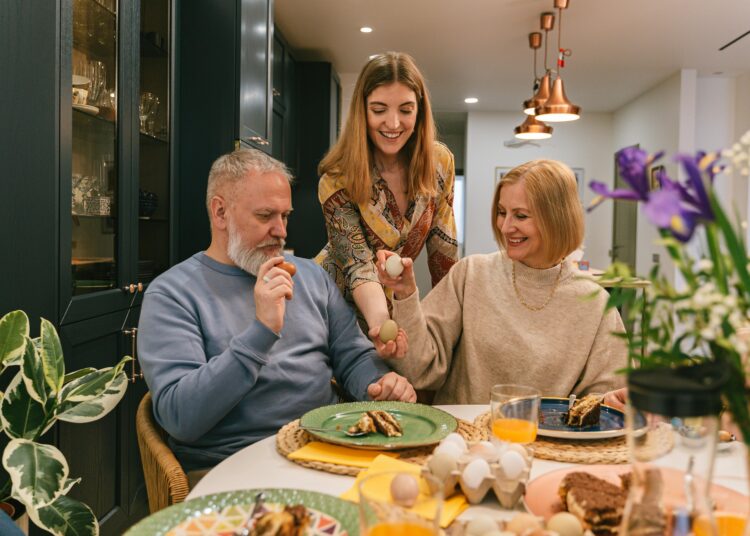
Holidays represent the peak of kinkeeping tension. The expectation that a celebration must be “magical” or “traditional” falls almost entirely on women’s shoulders. Around Easter, this involves not only dyeing eggs, preparing traditional breads (kozunaks), and grocery shopping, but also planning meetings with relatives that often require complex diplomacy.
While December is associated with coziness and rest, for the kinkeeper, it is a period of intense planning and stress. They are the architects of the Christmas dinner, the manager of family conflicts around the table, and the scheduler of social visits. During the holidays, kinkeeping turns into a second full-time job that must be balanced with professional commitments. In these moments, the kinkeeper ceases to be a participant in the holiday and becomes its engine, which often leads to total emotional exhaustion exactly when one should feel most connected to their loved ones.
Steps towards a more balanced future
Recognizing “keeping the family together” as a form of work is the first step towards lightening this load. Once we realize that maintaining family ties is not an innate instinct but a conscious effort, we can begin to distribute this responsibility more fairly. Instead of women being the only “connecting link” that keeps communication alive, other family members need to actively take on some of these responsibilities.
This includes everything from initiating phone calls to organizing the next holiday celebration. The goal is not for traditions to disappear, but for them to stop being a source of burnout for one person. When caring for the community becomes a shared value, family relationships become a true source of joy, rather than just another task on an endless list of commitments.