At the World Economic Forum 2026 (WEF) in Davos, sustainability and circular economy themes gained renewed prominence as part of high-level discussions on climate change, economic transition and the future of global value chains. One of the most visible contributions to this discourse came from Mexico’s top environmental official, who used the platform to highlight the importance of circular economy principles in national and global strategies.
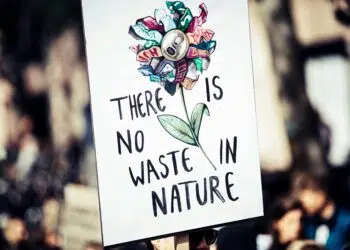
In Davos on 21 January 2026, Alicia Bárcena Ibarra, Mexico’s Secretary of Environment and Natural Resources, emphasized that the world must move faster on climate action and sustainability. She spoke about the need to shift from a linear economic model to a circular system, where resources are reused and waste becomes a resource rather than a burden.
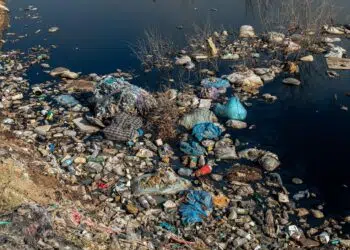
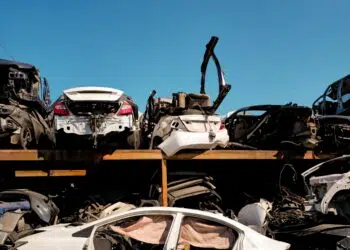
Bárcena made it clear that Mexico is pursuing an ambitious agenda that combines conservation, energy transition and circular economy measures. She pointed to initiatives such as developing circular economy parks focused on reuse of tires, construction waste and plastics, with the goal of generating new value chains within the economy.
She also stressed the urgency of climate mitigation and the need for partnerships with international companies and stakeholders to accelerate energy transition and strengthen circular economy projects. Her message was that current efforts, though meaningful, are not sufficient on their own and must be expanded quickly.
Circular economy in national policy discourse
Mexico’s presence in Davos did not occur in isolation. In the days leading up to the forum, the country had been advancing domestic policy that aligns closely with what was presented in Switzerland. Mexico has recently enacted a General Law for the Circular Economy, requiring producers and authorities to adopt circularity across design, manufacturing and waste management.
These legal and policy efforts underpin the country’s broader environmental priorities, such as protecting 30 percent of national territory by 2030 and transitioning toward net-zero emissions. Speaking before global audiences, Mexican officials framed the circular economy not as an optional add-on but as a necessary component of climate strategy and economic resilience.
Context at Davos 2026
The World Economic Forum brings together business leaders, policymakers and civil society actors to tackle interconnected global challenges. At the 2026 meeting, discussions ranged widely from climate urgency to geopolitical tensions but topics like energy transition and sustainable economic models resonated across sessions.
Mexico’s emphasis on circular economy reflected a broader recognition that environmental sustainability is integral to economic governance and social policy. In a year marked by debates over climate action, energy policy and economic stability, the country’s focus on transforming waste into resources underscored a shift in global thinking.
Why is this important from our perspective?
Mexico’s presence on circular economy at Davos is significant for several reasons:
- It underlines the growing political legitimacy of circular economy frameworks on the global stage.
- It connects national policy action with international dialogue, demonstrating how domestic strategy can shape and inform global agendas.
- It reinforces the idea that a circular economy is not just an environmental ambition but an economic strategy that invites investment, innovation and cooperation.
As leaders and businesses continue to grapple with the climate crisis, resource scarcity and structural economic shifts, debates at Davos 2026 point to a world where circular economy principles are increasingly central to how nations plan for resilience and growth.