
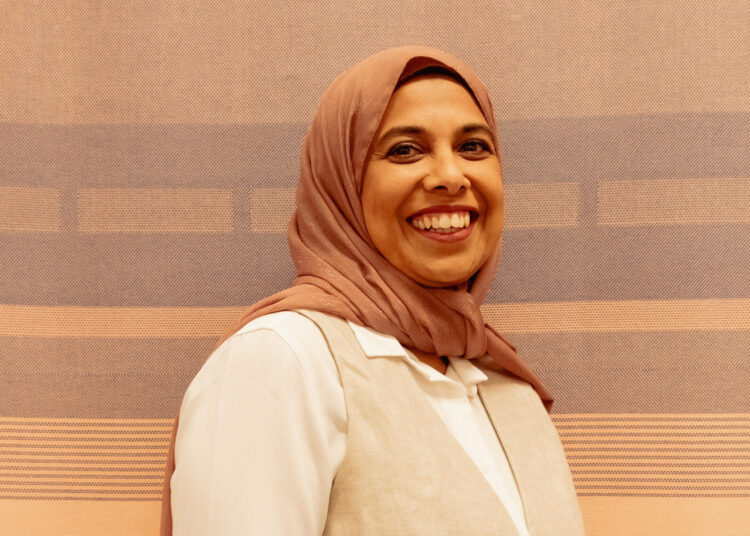
The conversation around Diversity, Equity, and Inclusion (DEI) is shifting. In a time of global economic and political volatility, organizations are being asked to re-examine their purpose and prove the tangible value of their DEI initiatives. We sat down with the Global Head of Diversity, Equity and Inclusion of the Financial Times (FT) Rukasana Bhaijee to discuss the current trends, the challenges of leading a global DEI strategy, and the measurable changes driving impact.
Rukasana Bhaijee is a Diversity, Equity and Inclusion (DEI) Leader with 15 years of People & Talent experience in Media, Technology, Professional Services and Higher Education. At the Financial Times Rukasana is supporting leaders and key partners to build an organisation that is representative of the demographics that they operate in and foster a climate where all talent has the opportunity to thrive in an inclusive culture.
The Changing Tide of DEI: Assessing activity for Systemic Change
How would you comment on the recent shift in attitudes towards DEI? What are some changes that you see and experience in your work?
The shift is undeniable, driven by political narratives, economic pressures, and a visible backlash against some DEI activities, leading to some organizations scaling back. My perspective, however, is that this is a critical moment to reclaim the narrative and reassess what we are truly doing. It’s a time for organizations to clearly define their why, how, and what in relation to building diverse teams and inclusive cultures.
For Financial Times, the “why” is rooted in attracting the best talent, removing barriers to opportunity, and supporting our growth ambitions. This clarity helps our leaders to understand their role in creating sustainable, systemic change and clarity for our people on our approach. If your activity is built into your core processes, policies, and standard ways of operating, they become embedded and create equity for all. This approach will help move them away from any performative activities that are taken away during moments of public or economic pressure.
Navigating Global DEI: The Power of Assumption Testing
What is it like to work with such a multicultural team spread across 3 continents? What are some of the challenges you face as a DEI officer?
Working across geographical and cultural boundaries within a global organization like the FT always presents unique challenges. A key strategy to overcome these issues is consistent overcommunication and repetition, especially when the cultural context is often centered in one main region. This necessitates constantly testing, checking and taking time to understand the specific cultural context and needs of local communities across different regions.
One of the most effective ways to navigate global DEI is testing assumptions. Inclusive leadership requires us to actively check the assumptions we make about other contexts/cultures or ways of being . For example, rather than assuming a global initiative will land well, we must ask local teams, “Help me understand what would land in your region if this is our global narrative.” This practice ensures the global narrative is delivered effectively with essential local relevance.
DEI Strategy: Representation for the Audience
In FT, not just the team, but the audience is diverse. How does your DEI strategy specifically address the issue of representation and diversity in perspective?
Internally, our goal is to be reflective of the societies in which our offices operate globally. We believe that if the people behind the scenes—building our technology, selling our products, and producing content—are diverse, they will inherently bring a broader range of perspectives and better understand the needs of our diverse audience. Regarding editorial content, the mission is to be reflective of a broad audience. This is demonstrated through initiatives such as setting targets to reach more women subscribers and following the 50:50 Equality Project, which ensures that quotes and sources in our reporting are representative with a gender lens. Furthermore, our editorial teams have developed detailed style guides for language pertaining to different aspects of diversity, including race, disability, and the LGBTQ+ community, ensuring the FT’s tone of voice is accessible and respectful to all communities.
Measuring Impact: Beyond the Obvious Metrics
What is one specific, non-obvious DEI metric or accountability structure that you believe has been most impactful in driving measurable change within the last year?
While most organizations track obvious metrics like representation distribution and inclusion questions in annual people surveys, an increasingly powerful and non-obvious metric is measuring the sense of belonging and psychological safety, often done through dedicated culture pulses.
This moves beyond just having diverse representation or a general feeling of inclusion. It tests for the most potent level of inclusion: Do people feel confident and able to share their voice and opinion without fear of repercussion or retribution because of who they are? This sense of safety is a fundamental test. When an employee, regardless of their intersectional identity, feels they can speak up, it demonstrates that inclusion is working at a deep, behavioral level, driving measurable cultural change.
Personal Impact: Simple, Powerful Advice
If you could offer one piece of advice to our readers—whether they are employees or managers—about how they can personally contribute to a more equitable and inclusive environment starting today, what would that be?
The most powerful piece of advice is also the simplest: Be mindful about how you show up in everyday interactions. It’s not about grand, sweeping gestures; it’s the little things that matter in the daily moments. Individuals should constantly question themselves: How can I show up for this person right now? What does this person need? What part of my behavior can I change? Small, genuine acts, like truly checking in on a colleague’s weekend or taking the time to understand their values, build the foundation of trust and inclusion. These everyday interactions directly impact someone else’s lived experience of the organization.
For those who wish to drive systemic change, a second, highly practical piece of advice is to audit your policies, processes, and ways of operating with an exclusion lens. By actively looking for who might be excluded—whether it’s a parent who may be disadvantaged by meeting schedules, or a colleague with a disability who may find a process inaccessible—you can effect long-term, systemic change that compliments positive individual actions.