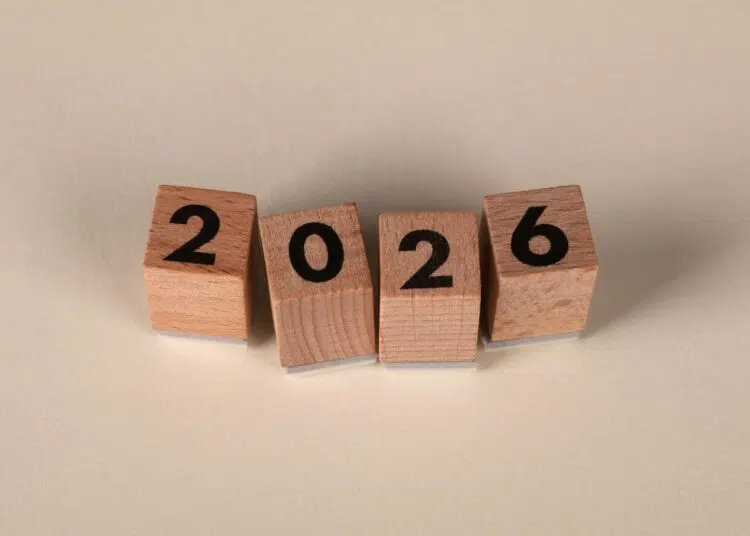
The circular economy will continue to be a major focus of policy, business and innovation in 2026. After a year of milestones in 2025, the next stage is about scaling action and turning frameworks into measurable impact. This year will be defined by new rules, fresh standards, stronger investment and deeper international cooperation.
Global frameworks for circular business action
In late 2025 at COP30, a new Global Circularity Protocol for Business (GCP) was launched to provide a common framework for companies to measure and manage circular performance. The protocol was developed by the World Business Council for Sustainable Development and the One Planet Network, supported by the UN Environment Programme. It aims to harmonise reporting and help businesses embed circular practices across value chains. Early analysis suggests that wide adoption could enable 100–120 billion tonnes of material savings by 2050, with major reductions in emissions.
In 2026, this global framework is expected to gain traction as companies begin to align internal metrics with external reporting requirements and stakeholder expectations. This could mark a shift from voluntary action to deeper corporate integration of circular metrics.
European Union steps up regulations
The European Commission is preparing a Circular Economy Act, planned for announcement in 2026, with the aim to strengthen circular rules across the single market. Pilot measures announced in early January seek to address fragmentation in the plastics recycling market and support investment in recycling infrastructure. These steps are part of broader efforts to boost the EU’s capacity to reuse and recycle materials at scale.
Under the Horizon Europe 2026–2027 Work Programme, circular economy topics will be integrated across clusters related to plastics, textiles, electronics, packaging and critical raw materials, signalling that circularity is becoming a cross-cutting priority in European research and innovation agendas.
Regional focus and international cooperation
Circular economy activity is increasing at regional and project levels too. In Stara Zagora, Bulgaria, an international meeting on the TEXAD project will bring stakeholders together to discuss financial mechanisms and investment opportunities for circular solutions in the textile industry. Forums like these highlight the importance of regional networks for advancing circular manufacturing and investment.
Events such as Circular Connect 2026 in Vienna will also seek to build collaboration and share planned activities, underlining the need for cooperation among governments, businesses and civil society in driving the next phase of circular transformation.
Still a lot of challenges
Despite progress, global circularity remains low. The Circularity Gap Report 2025 found that only 6.9% of the world’s material use is circular, meaning the vast majority of resources are still consumed in linear systems. This underscores the continued need for systemic approaches that go beyond recycling alone and address the underlying dynamics of production and consumption.
In 2026, the focus will be on implementation and scaling. New regulatory frameworks, harmonised reporting, and cross-sector partnerships will shape how countries and companies turn circular goals into real results. The year ahead will likely bring clearer links between circular practices and economic competitiveness, deeper integration of circular design into industrial strategies, and more measurable outcomes at national and global levels. By moving beyond pilot initiatives to mainstream deployment, 2026 could be a defining year in the evolution of the circular economy.