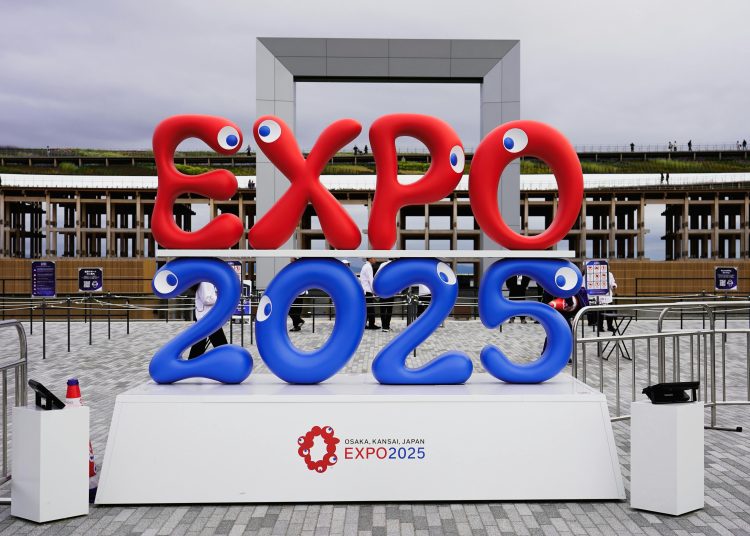
The European Commission and the European Economic and Social Committee (EESC) are preparing a major showcase at the Osaka World Expo 2025 in Japan. From 22 to 24 September, they will host the Circular Economy Days. The goal is to promote global collaboration on reducing waste, conserving resources, and creating sustainable business models.
Focus on textiles, cities, and resources
Events in Osaka will highlight challenges and solutions across key sectors. One focus is the textile industry, a sector under heavy pressure for overproduction, waste, and unsustainable practices. New European rules already require producers to take responsibility for textile waste through extended producer responsibility schemes. The expo is seen as a platform to share these policies globally.
The Circular Economy Days will also discuss sustainable cities and resource efficiency. Experts will look at how urban planning, recycling systems, and business innovation can reduce material footprints.
Global collaboration is essential
The EESC emphasized that the circular economy is not only a European project. Resource scarcity, climate change, and biodiversity loss are shared challenges. By hosting workshops and panel debates at the expo, the EU wants to connect with governments, companies, and civil society from Asia and beyond.
Speakers will underline that recycling alone is not enough. Cutting resource use in housing, food, energy, and transport is also needed. This links with broader discussions around the European Circular Economy Act, expected in the coming years.
Japan and Europe as partners
Japan has its own tradition of circular practices, with policies encouraging resource circulation and waste reduction. Bringing Japanese and European stakeholders together is seen as an opportunity to create new partnerships in technology, innovation, and policy. Ricoh, one of Japan’s leading technology companies, announced it will join the expo with a special exhibit at the Ministry of Economy, Trade and Industry’s Circular Economy Research Lab.
Why this matters?
Circular economy policies are becoming central to global sustainability efforts. According to the Club of Rome, binding targets for reducing resource consumption must be introduced soon if climate and biodiversity goals are to be met. The Osaka Expo is a stage for the EU to push this agenda beyond its borders and invite global partners to act together.
The message from Brussels is clear: sustainable growth cannot exist without closing the loop.