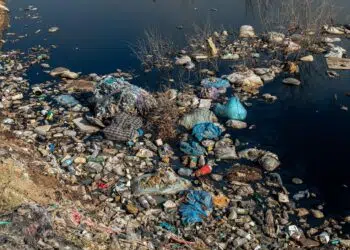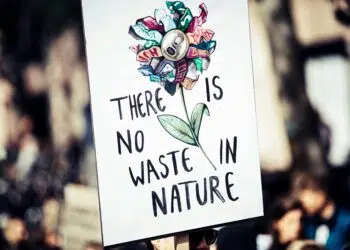

In today’s world, growing food without depleting resources is a major challenge. Soil nutrients are a limited, yet essential, asset for growing healthy food. When we lose them, we undermine future food production. That’s where closed nutrient loops come in – turning waste back into fertilizer instead of letting it become a disposal problem.
What are closed nutrient loops?
A closed nutrient loop means we reuse nutrients instead of losing them.
This involves turning food waste, agricultural by-products, and even wastewater back into fertilizer or soil enhancers. Essential elements — nitrogen, phosphorus, and potassium – are recovered and kept within the system. This maintains soil health and reduces reliance on synthetic fertilizer.
Why this matters today
Across Europe, fertilizer prices are soaring, adding financial stress to farmers. Meanwhile, fertilizer production emits large amounts of CO₂, fueling climate change. Nutrient runoff from fields further degrades freshwater lakes and rivers, causing toxic algal blooms – a process called eutrophication. Turning waste back into fertilizer is a powerful way to ease these pressures. It strengthens food chains, protect water and it cuts down greenhouse emissions.
Innovations making it possible
Composting food waste and turning it into rich soil fertilizer is a well-established practice – but there’s much more. Bokashi, for example, lets you safely process all food waste – even dairy and meat – adding valuable nutrients back into soil. Anaerobic digestion converts waste into biogas and fertilizer rich in nitrogen. Recovering phosphorus from wastewater (such as struvite) lets us reuse this limited resource instead of mining it. Some EU-funded projects, like LIFE ENRICH and Nutri2Cycle, demonstrate closed-loop innovations at scale.
Real-Life impact
This approach is already delivering results. In Murcia, Spain, the LIFE ENRICH project recovered up to 85% of phosphorus from wastewater. This phosphorus is now used by local farmers instead of adding to freshwater pollution. Meanwhile, community compost programs in London and the Bokashi trial in Israel show that closed loops can aid soil health and produce strong, healthy food.
The future is circular
Creating closed nutrient loops is not just a policy wish – it’s a necessity. This approach helps us grow food without depleting resources, cuts waste, and safeguards freshwater for future generations. With growing policy support, innovative technologies, and strong collaboration across sectors, closed nutrient loops can become standard practice. This is a key step toward a resilient, sustainable, and regenerative food system – a future we can all be proud of.