
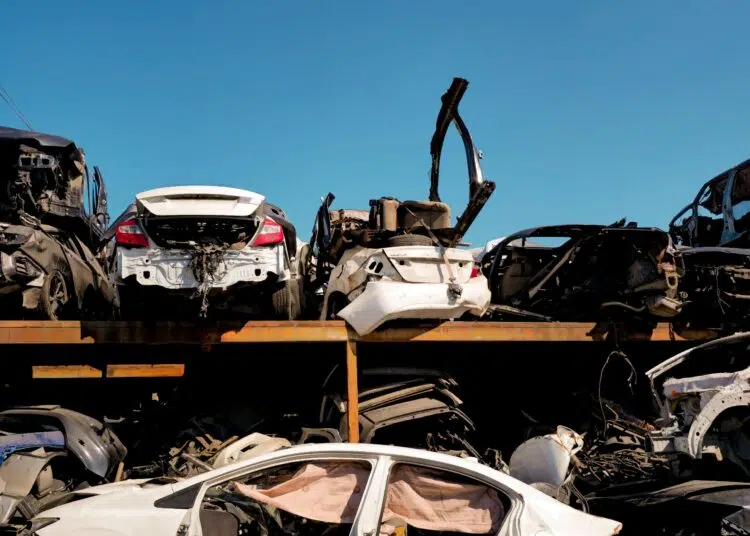
Global Car Recycling Day takes place on 20 June 2026, the fourth year running. The campaign was never meant to be a one-off awareness stunt. Each year the organizers point to the same uncomfortable fact: the global car fleet keeps growing faster than the systems built to deal with it once it dies.
The current estimate puts the number of cars on the world’s roads above 1.6 billion. That number alone explains the stakes. Every one of those vehicles will eventually need to be dismantled, and what happens at that point determines whether steel, aluminum, copper and rare earth elements get a second life or end up buried.
Electric cars are changing the math
Roughly 5 percent of cars on the road today are electric, but the share is rising fast. One in four new cars sold globally is now electric. That shift creates a problem nobody has fully solved yet. Electric vehicles bring high voltage batteries, different chemistries and new safety requirements into the recycling chain. Even recycling industries with decades of experience handling petrol and diesel vehicles are still working out how to handle this volume of battery waste safely and efficiently. In countries with no formal end of life vehicle regulation at all, the gap is far wider.
Some regions are moving slowly
The picture is not entirely bleak. A few concrete policy steps have landed over the past year. In the EU, new vehicles must now contain at least 25 percent recycled plastic, with more than 6 percent of that required to come from closed loop recycling, a figure set to rise to 20 percent by 2036. The EU has also widened its end of life vehicle rules to cover lorries, buses and motorcycles, categories that were exempt before.
Elsewhere the pattern is similar but patchy. China now requires car manufacturers to operate a set number of recycling service outlets tied to their regional sales volume. Japan has mandated that more than 15 percent of plastic in new vehicles must come from recycled sources within the next decade. The UK has introduced environmental permits requiring lithium ion batteries to be physically separated from lead acid batteries before recycling, a rule aimed squarely at preventing fires and contamination.
New Zealand, Malaysia, Turkey and Thailand are all reportedly closer to introducing their own formal vehicle recycling regulations, though none has crossed the line yet.
Why the campaign keeps pushing?
The organizers behind Global Car Recycling Day were blunt in their statement this year, calling the policy progress of the last twelve months real but nowhere near enough to match the scale of the problem. Their message for 20 June is straightforward: more individuals choosing responsible recycling where it exists, and more pressure on governments and industry where it does not.
The hashtag #GlobalCarRecyclingDay2026 is the entry point for anyone wanting to take part.