
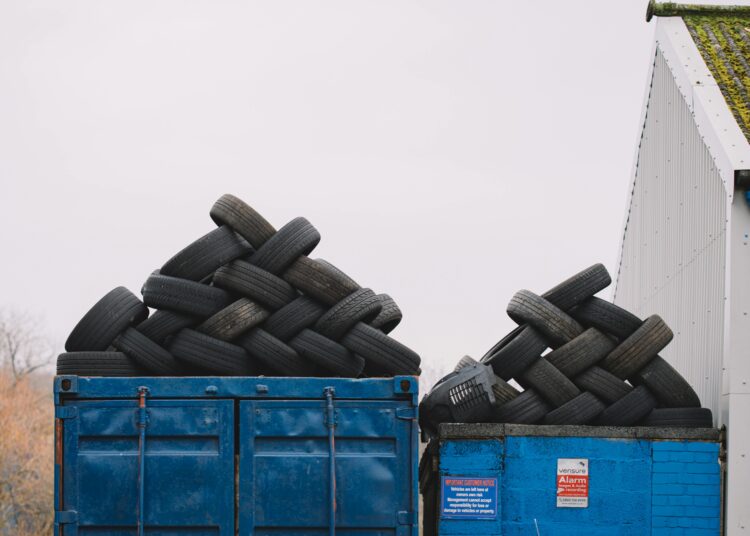
Every year hundreds of millions of vehicle tyres reach the end of their life. Тyres are made from complex mixtures of rubber, steel, carbon black and chemicals. This makes them difficult to recycle using traditional waste treatment methods.
For decades, most used tires have been burned as fuel in cement kilns or shredded into low-value materials such as rubber granules. These options keep tyres out of landfills but do not recover their full material value. In many cases, the process simply converts waste into emissions rather than new resources.
Circular economy strategies are now changing this approach. New technologies aim to recover materials and energy from end-of-life tyres and return them to industrial supply chains.
Turning waste tyres into raw materials
One of the most promising technologies is tyre pyrolysis, sometimes called thermochemical recycling. In this process shredded tyres are heated in an oxygen-free environment. The rubber breaks down into several useful outputs. These include pyrolysis oil, recovered carbon black and steel.
Recovered carbon black can be reused in manufacturing. Pyrolysis oil can serve as a feedstock for fuels or chemical production. Steel extracted from tyres can be recycled through conventional metal recycling systems.
Advanced pyrolysis plants are improving quickly. New systems can recover up to 95 percent of the material from waste tyres, creating strong economic potential for the recycling industry.
This technological progress is pushing the tyre sector closer to a circular model where materials remain in use instead of becoming waste.
Waste tyres entering the energy transition
A major recent development came in March 2026 when German recycling company Pyrum Innovations received ISCC EU certification for thermolysis oil derived from end-of-life tyres. The certification allows this recycled oil to be used as a sustainable feedstock for biofuel production under the European Renewable Energy Directives.
The decision opens the door to regulated markets for renewable fuels. It also connects waste management with the energy transition. Recycled tyre oil can replace fossil raw materials in refineries and industrial processes.
Some countries are also beginning to recognise tyre-based pyrolysis oil as a legitimate industrial raw material. France, for example, recently classified it as a chemical feedstock. This move helps integrate recycled materials into established supply chains and encourages investment in circular recycling technologies.
Industry partnerships and scaling solutions
Industrial collaboration is accelerating the deployment of these technologies. Energy companies and recycling firms are forming partnerships to supply pyrolysis oil from tyre recycling facilities to refineries. These projects aim to produce alternative fuels while reducing waste and lowering reliance on fossil resources.
At the same time, international initiatives and industry conferences are focusing on circular solutions for tyres. These platforms bring together manufacturers, recyclers and policymakers to develop scalable systems for recovering materials from tyre waste.
From waste stream to circular resource
The shift toward circular tyre recycling reflects a broader change in how industries view waste. End-of-life tyres are no longer seen only as a disposal problem. They are increasingly treated as a source of valuable materials and energy.
If new technologies continue to scale and regulations support recycled feedstocks, waste tyres could become a key resource for both circular manufacturing and alternative fuel production.